
Call 911 I've Been Wrecked - Exclusive Interview with Robert Jon and the Wreck

 Apple Podcasts
 Spotify
 Castro
 RSS Feed
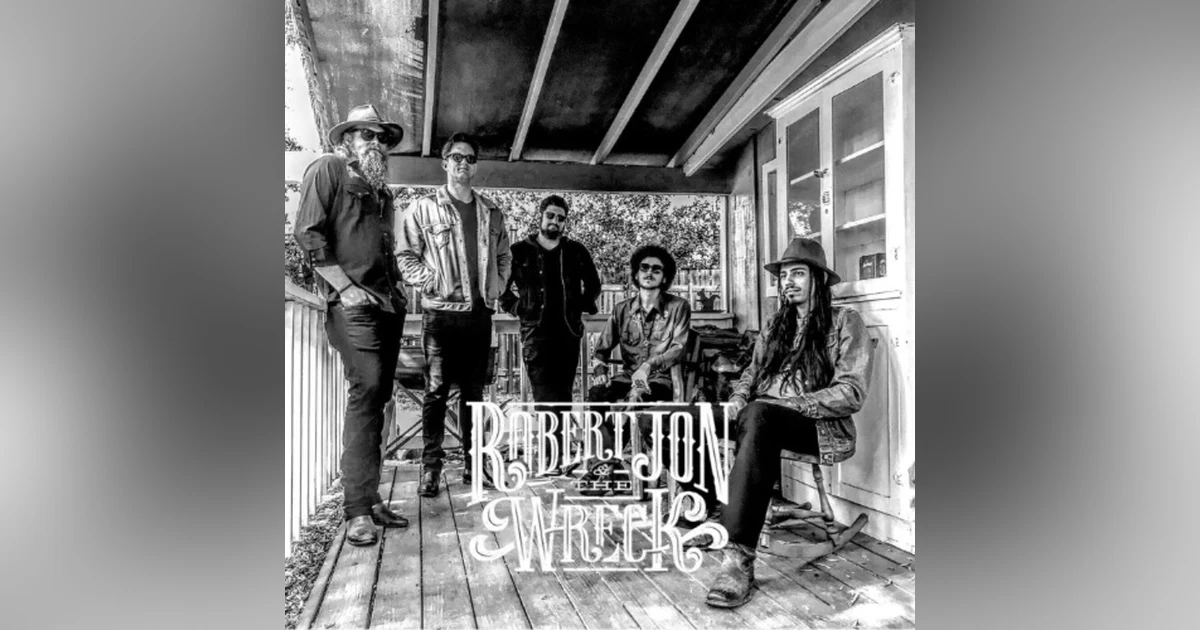
 Reigning from southern California, Robert Jon & The Wreck take the southern rock sound from the east coast and make it their own. Since their inception in 2011, these four native Californians; Robert Jon Burrison (lead vocals, guitar), Andrew Espantman (drums, background vocals), Henry Schneekluth (lead guitar, background vocals), and Warren Murrel (bass) have been electrifying audiences all over the world with their soaring guitar leads, rich vocal harmonies, and memorable tunes. Fueled by this success, RJTW took the road again delivering fierce performances, emblazoned with commitment, and dripping in a rawness that’s impossible to fake. Simply put, it is difficult to ignore when these talented musicians take the stage. Little wonder they have made an impact on audiences across the world, where they’ve played a run of sold-out shows and proudly shared bills with talent the likes of Joe Bonamassa, Walter Trout, and Rival Sons. The Wreck found their flow with yearly tours, returning to California and prolifically releasing new music. 2021’s studio album Shine A Light On Me Brother gained worldwide acclaim. They teamed up with Joe Bonamassa’s independent label and released two singles in early 2022 with “Waiting For Your Man” and “She’s A Fighter.”
Discover more about Robert Jon and the Wreck by watching their exclusive interview with The Trout.
https://robertjonandthewreck.com/
https://www.thetroutshow.com/
Thanks for listening for more information or to listen to other podcasts or watch YouTube videos click on this link >
https://thetroutshow.com/

Season 03 - Episode 15 – Robert Jon | Transcription
Sponsored By:Today's podcast is supported by David Smith of Edward Jones. Are you happy with your financial strategy, or maybe like to see what other opportunities are out there? Give, David, a call at 469-372-1587. That's 469-372-1587. David is only concerned about one person that you and your financial health. So check him out. David Smith, Edward Jones 469-372-1587.
PODCAST INTRO (Trout): Hey everybody, it’s Trout. Hope you're having a great day and welcome to The Trout Show. Then intro was from a great band called Robert John and the Wreck playing live of song they wrote and performed called “Hey Hey Mama”. Now sound like you got a little bit of southern influences there, the Allman Brothers, Marshall, Tucker, Ilana and Skinner. But these boys are from California. And they've been together for years. And they tour all over the world. And they just a great rock band. I'm so glad that Robert Jon got to speak with me about the band. I think you'll enjoy listening to this. Because there they are kind of a classic rock style, Southern influence. But like I said, they're from California. And their music is just pure rock and makes you feel great. So stay tuned for that real quick for Robert John the wreck and you'll hear more about what's happened to the band, how they got together, they've been together for like 10 or 15 years, which is unheard of in the music business. And you'll learn about where they're going from here and how they're turning and going to Europe and all sorts of great things about their next album coming up. And they're on number eight, which is kind of incredible when you think about it. So up next, the kind of music that I like a lot from Robert Jon the Wreck. Their story and their music is next on The Trout Show.
Trout: So I want to start out with a couple of things. And then I'm going to delve more into your music. I usually spend a lot of time talking to people about their history and all that. But I'm so impressed by your music because I'm much older than you, but it sounds like something I grew up on. And the fact that not a lot of people outside the business know who don was is, but I do. And you guys have had a lot of really well known producers that have helped you out, which is amazing to me, because Jon has done a lot of famous people. But I want to start at the beginning you guys have been together is the original band, the same band that started back years ago. I mean that says 2011. Is it the same?
Robert Jon: No. We've gone through different lineup changes throughout the years. Kind of in different segments of our career. But Andrew Spackman, the drummer, in Robert Jon the Wreck, he's been with me even before the band was called Robert Jon on the Wreck. I did like this coffee house tour up the West Coast just because why not I have the ability. I called him and he came with me and I think from what I remember he played brushes on a snare and use the snare case as the kick. And we were in my Chevy Silverado. I think there was four of us and we didn't know any better. I think we were 20, maybe 21, maybe we were 21 for like you might have been having beers, but he's been with me. It has to be, I mean, we're probably getting on 15 years.
Trout: Well, I think the thing about it is and I've been in multiple bands myself, I think one of the hardest things to do is to keep a band together. For those people don't know anybody music first you got to find people that have the same desire and the same drive because that sometimes you all get to, we want to play. And then I always found that people didn't want to drive as hard as I did. We'll play some bar gigs. We'll do that. What about a record deal? Oh no, I don't know about that. Let's go to studio. So I think it's admirable that you guys have been able to play together. I mean, it was a lot of famous bands out of my state, like ZZ Top until Dusty passed away. They've been together 50 years. That's admirable, and I think in you, correct me if I'm wrong, that allows you as a band to be more solidified. And also you pretty well know what everybody does, you know the strengths. And when you go into studio, I'm gonna get to that in a minute. But when you're in the studio you already know it, and you kind of play off each other because you've already been down the path? Because I think you can correct me if I'm wrong, but you have to check your egos at the door to a certain degree.
Robert Jon: I mean, we're all in it together. It's a brotherhood, and it has to bright in the band right now with Warren and Henry, they've been in for, I think, over five years now. So they've been, they've been in the band longer than anyone else has, in the past. And it works, because we all have to lean on each other. I mean, especially during those weird times, and 2020, and 2021. We all have each other's back. And it's any relationship, and my wife tells me all the time, but it's all about the communication part. And if someone has an issue, we talk about it in the room, and then we flush it out, and then we move forward. Because if you let things hang on to you, or you don't talk about things, it just doesn't work in one aspect or another.
Trout: And I think the other thing too, is somebody even though you had last band, we broke up during COVID, like so many other people did, but somebody has to be the leader, you may not be the leader, leader, but somebody still has to drive it. And when I came in, and I put the band together, they would go like, what do you want to do here? And we had a consensus on stuff. But then it was like me, and I was like, okay, because my background is in executive management and stuff like that. But I think the other part of me is that you have to get together, and sometimes the best part for me about being in a band is like you guys been together so long that there's internal jokes that nobody else gets. The band has their own thing going on. And people I don't understand why they're laughing. You never will.
Robert Jon: And even if we tried to describe it or give you as many details as possible of why this is such a great thing. It still doesn't land as much because you have to be there in that moment. You had to have gone through that situation and that's why it's a brotherhood in all the aspects. I mean, even when it comes to music, I don't have to turn around and I know exactly what Andrew is gonna play. Like, I know what Phil's gonna come up next. Because I used to play rhythm. So I'm usually with Andrew more than anything. I know, when he goes off into that direction, I can follow him and I don't even have to worry about it unless you tried to throw a fast one on us.
Trout: So tell me a little bit about your music as far as yourself. What did you grow up listening to?
Robert Jon: I grew up listening to oldies radio station with my dad and old gospel records. Those old like Cortez, Gaither brothers Oak Ridge Boys.
Trout: Did you grew up in California. Are you from California?
Robert Jon: Born and raised in Southern California. And so that's what I grew up on. That's what I was. Remember listening to first. And then I remember the oldies station on the way to school for however many years, kindergarten through sixth grade, seventh grade, it was always Kth 101 which is our oldest station here, which is now playing classic rock. But back then they were playing the old Motown hits, and that's what I remember vividly hearing for the first time. And an Oak Ridge Boys were one of the main ones. I remember listening to that in the house all the time.
Trout: And you music is far removed from Oak Ridge Boys. I mean, as far as what you guys do?
Robert Jon: I mean, that's the base. And then I got into classic rock in junior high. Boston, Aerosmith, I mean that generation and that was my foundation. In high school, you start listening to whatever's kind of coming out at the time punk and there was a big hardcore phase and but then listen through it in high school because you think that that's what you're supposed to do as like an angsty teenager. But then I always fell back on the classic rock and then getting in later years to the Allman Brothers and the Black Crowes and the other music still has nostalgia for me, but that's the music I'm driven to and enjoy and their soul to it with their soul and rock and roll it's rock and soul.
Trout: So when you have a southern influence to your music. I mean, you obviously do that you mentioned Allman Brothers while ago but you listen to. And one of the things that I think you really have vanished I'm talking about you personally, is your singing quality, you've got that little bit of gravel in your throat, that happens naturally and that kind of adds a color to it. It kinda reminds me of that time with the Marshall Tucker band and Allman Brothers Band, and everybody's coming out at Georgia and all that unlettered skin and all that stuff. So that kind of adds a lot to it. So when you listen to it, I don't know what you'd agree with this. But I always think that right now that there is a tendency, I think what you guys play. I think more people are looking for that. I really do because I'm sick of what was playing on the radio. And you go to classic rock, it's the same stuff over and over again. It's like I don't want to hear Stairway to Heaven again. I'm sick of hearing that. I've heard it enough. I don't want to hear that One Zeppelin song I can't stand although I'm a zeppelin fan. A couple of my players is like, could you stop your music. And because you can't find anything. So you do your own playlist or whatever you're going to do. I think your music lends itself to more prominent type. I think more people like in my age group a little bit younger are looking for that if they grew up on, but you can't find it. So what do we do we go back and listen to the old stuff again. Like you said, I started listening. You've guys have toured a lot. You tour all the time, obviously. I know this is off subject a little bit, because I've talked to other musicians that play in Europe, don't you find it's different playing over there that they're a little bit more, I wouldn't say accepting. But do you get a better response in Europe than you do in America?
Robert Jon: I mean, people have asked that too and we do. It’s a way different response than we get in the States. But I believe that there's a different reception of American rock and roll out there than there is in America as a whole. There's still a lot of people in the states that love that music. But we've toured a lot in Europe, and we've basically toured more in Europe than we have in the States. So it would make sense that we're you're getting a bigger response in Europe, because we haven't put as many hours and time into the states as we may have thought we might have. So one of our main goals especially this year, and moving forward is putting some more time in the states to get that reception equal to both shorts, because I think the people are here. But it's the same thing. It's one difference is we did a radio show in Belgium. And that radio show in Belgium is heard all throughout Belgium, and even parts of France and parts of Germany. And if you do one radio show and I'm not gonna even say where we did it in Little Rock Arkansas. I mean, that's Little Rock Arkansas. It's not the whole of Arkansas. It's not part of that's it. And a lot of people in the states don't listen to radio much anymore. Because, like you said, I mean, trying to find something new, and they're just playing a lot of the old stuff. So I think that the marketing and PR has a thing to do with it when it comes to the whole of Europe.
Trout: And I had this mentioned to me, and it's true. You're not competing with hip hop, rap, or country when you go to Europe, it's not the same. So they don't have that influence. But what you mentioned a while ago, and I've thought about this too, it's been years though, but you know the bands that used to tour. They'd get because I remember I'd get up in the morning and listen to somebody that was getting ready to play that night. They get interviewed, they go into studio and a station. And sometimes they can play their guitars and talk about it. And people could ask them the question as DJ as well, that doesn't exist anymore. I mean, it's very rare that you hear it. And I think that was part of, I don't know why they could do it, maybe it's because it's so packaged now. Everything's done by some program director who knows where, and that's the part I think that I miss is that opportunity. And you guys probably do, too, like, when you go to your city or in Belgium, they want to talk to you. And I want to know more about the band, because it makes you more, first of all, to find out what you really like. I mean, if you put the other thing, this was told to me too, is they still listen to CDs over there. So if you can go over there, as over here because you tour it, it's not like it was before he go hug, buy their album and go, they're coming to town. Now you can't really do that. I mean, you go and listen to him. But there's so much music out there. That in Europe, it's a little bit different. Because then you can when you go in, I can go buy your CD. And I just think it's an interesting think.
Robert Jon: I mean, it's very interesting. Because when it comes to that stuff, it's a very different world which is interesting. Because as a world, we all went through very similar things just now. But when it comes to that, it is a very different space. And it's been great to us. I mean, we'll be back there in May in July, and then again in August so it's a treat, we love it.
Trout: So you're working on, how many albums you have, five? So how many of you had now?
Robert Jon: I mean, I think it's seven.
Trout: Is it seven now?
Robert Jon: I think. I barely can keep track. So for people listening to this can know.
Trout: Did you just released an EP, or you're doing that? I've listened to it before I listed it again a while ago.
Robert Jon: It's called one of the kindest.
Trout: And when you guys get together, is there a is there a common person that writes the music or you work together as somebody who comes in with the idea and say, I like this song. How's it work for you guys?
Robert Jon: We are all writers, which is awesome and great. And we all work together on the songs. I mean, if someone has an idea, we flesh it out in the room, and we put it together and someone has a verse and a chorus, but they don't know where to go, then we flesh it out. And whether we all share the duty in songwriting, which I think is why we've been able to record so much and have as much music out as we do. Because it's really cohesive, and we're all together. And we have five brains working together on these projects, so the weight is not held on one person's shoulders. And there's certain records where one person will write a little bit more than someone else. And then on the next record, that other person writes a little bit more.
Trout: Well, that's a creative process works. Because you never know when it's gonna come to you. As a songwriter myself, you never know when it's gonna come to you. That's one thing I like about your music, it's more got that I can't explain it to you, it's got more stuff. Like when you start a song, it's got more of you're doing some e-stuff and playing some notes and stuff is playing with chords and stuff like that. And it's not, there's some keys on it, too, but you don't have synthesizers, you don't have that stuff. It's this kind of a raw approach to it which we used to have all the time and listening to it, and there's, of course, this is what happens because you have a thread, which it all has a tendency it didn't sound like but you can tell it's the same band.
Robert Jon: Yeah, for sure.
Trout: Tell me how you guys, I know used to be and it's not the same anymore. So you got the EP, you guys didn't go out and try to promote your EP. I mean, obviously you've got with all the songs that you've guys done. If you get an opportunity, what's the typical show length are and a half, two hours hour and a half what you typically play?
Robert Jon: It's usually about 90 minutes plus an encore if it's asked for and we get to beforehand that sounded like a mission. I mean, we would play 25 minute instrumentals because in the early on we needed the time to fill.
Sponsor: Concerned about your financial health and reach out to David Smith of Edward Jones 469-372-1587. That’s 469-372-1587. You can conduct business where you are. Get your financial health check up with David Smith of Edward Jones, his number one concern is you. That's David Smith of Edward Jones 469-372-1587.
Robert Jon: And now, we can't even fit all the songs we would like to play in 90 minutes. So it gives us liberty to try to change up the set quite a bit, especially when we're playing two hours down the road. I mean, I know this last run that we did in the States, there was a couple that came to three of them. And then there was another couple that came to four. And then in Europe, there was a couple that came to five. So we have we have people coming to multiple shows, which is awesome. And also kind of puts us in our place, meaning we're not gonna do the same exact show every night. No. Because we want if they're traveling from man, Pennsylvania, seven hours down and getting hotels and traveling throughout, we want to give them the best show possible, and the best experience possible.
Trout: That's always very rewarding as a performer that people come up to you and say, I was here and I'm here, I drove down here. So then you must turn it over to go and think that we must be doing something.
Robert Jon: I mean, just the fact of people enjoying our music is really what we set out for. And then anything on top of that is, people telling us that song meant the world to them at a certain time, that's huge for us. And then people coming out to the shows in general. And then people come in to multiple shows. I mean, it's appreciated, and it's what fuels us to keep moving and keep going, and keep doing what we're doing.
Trout: Do you think that a band like yours, there's so much competition out there now? Are your goals, I assume everybody in what you do. You want to play bigger and bigger places. But don't you think it's getting harder and harder to compete with so much other music out there? I mean, you're kind of in a unique area, you're in your own silo to so to speak. But so is everything else to a certain degree. There's no such thing as top 40 radio, and that's all gone. Is it usually and you've been doing this a long time yourself, you've hit a wall. Is it gotten harder or easier, or has it been the same for you guys to get more people to come to your shows, or become more prominent people know who you are?
Robert Jon: I think it's learning battle the whole time. Because early on, you think if I book a show, and tell people about it, then people come. And then you realize, just having a show doesn't mean doesn't mean anything. No. You have to give people the reason to come. So if you have music, that's not great. And you book a show, and no one's there, and you get upset because the system is flawed, that's not really how it works. You could play a bar gig at a bar, that's cracking on a Friday night, and people are there. And that's a lot of fun, but they're not there for you because they want to have a good time and they're enjoying the music. So we've just been figuring it out as we go, and in marketing and getting the music in front of in people's ears is a whole another mission that that has to happen, and it has nothing to do with looking at a show and going out and playing it. And social media now has become a vessel that can be used if you know the proper way to use it. And luckily, I have people in my band who spend time and learn how it's properly supposed to be used. I'd have no idea.
Trout: Tell me about how they came about that Joe was decided or you guys decided to work with him or he decided to work with you is what how that happened?
Robert Jon: I mean, I'm still trying to figure it out really. We started working with Jerryman Records, and the team over there and we got to meet some great people.
Trout: Have you talked to Joe? Have you met Joe?
Robert Jon: We were in the studio with him not too long ago which has yet to be released. And we were just throwing out some ideas of people who would be great. And we have a great band mom, as we like to call her name Sharon, and she's well influenced in the whole recording world. And she was able to connect us. And Don seemed to enjoy what he was hearing and wanted to work with us. And so we got in the room with him and feel like the first five minutes, the first five minutes, you're like, where am I? We're here. And then it's so comfortable that he just creates the space and you're like, “Well, we're here to do our job and work together.” And it was a great experience. I mean, it was. And you don't even think about it until after it's over. And you're like, “Guys, what do we just do?”
Trout: Well, he becomes the producer becomes part of the band. They really do. And when you got a guy like that with the history that he has, if I walked in there, I just think okay and first off, why am I here? Am I really worthy to having this guy? And secondly, he's going to have some great ideas. And third, am I going to be one of these people to go? Do I really want to listen to him because then my mind goes through as well. I know who he is but I got my own ideas. That all runs through your mind, I'm sure. But you get back to what, I think it's really cool too, that Bonamassa has done this thing with this label. Because I think there's a couple other bands, I've done that work with him. And obviously, a lot of the music is like yours. Because it's kind of cool that you have that opportunity, because you got a guy that owns a label that understands the music industry. And that that just changes the whole time because the labels don't understand, but their job is to make more money.
Robert Jon: It's a different kind of beast, if you will, it's there too. I mean, money is still a thing.
Trout: You gotta make money.
Robert Jon: And people want to make money for the efforts that they're putting out, but there's a growth that is seen, compared to another label, they put you on the label cake, your records not selling, why is it not selling? But in this version, it's seen as the overall aspect. We got to put in the work here to then have growth here. We put in the work and we have all the growth right now or money or whatever it looks like. And being in a band, I feel like that can be harmful for young bands do thinking that, we've been doing this for two years, why have we caught a break or anything? And I remember my drummer Andrew, we sat there and said, “Hey, let's reevaluate this in 10 years that was our ideal.” It was like, “Cool”. 10 years down the line, I hope that we're making something.
Trout: I really believe too, that a lot of the people like everybody I talked to, that are in the business, they are driven. And I know this sounds silly, probably people that aren't musicians, but you would do what you do, if you could and not get paid if you could live without doing. I mean, in other words, if I never got paid, but I got my living covered, I'd still do it. It's just like, you just kind of basically said that. I mean, you said, I'm gonna look 10 years, and I hope we're making something. And then you look at it and go, “Why did they keep doing this if they're not making any money?” You can explain that. You can't.
Robert Jon: And there's a different level, everyone has different levels here. And if you don't set it out and do it, and go through how to do it, then you can't say that “Oh, I tried it and didn't work for me.” Well, did you put everything into it? There's different levels of success for different people and there's different goals for different people. And there's comforts that are needed for certain people that aren't for other people. Everyone's different and how they look at it and how they move forward with their decisions and their hopes.
Trout: Well, I go back to what I said earlier, and that is your band, all have the same drive to get where you want to go. That's a big deal right there, and it's hard to find people to do that. And sometimes people they have to understand somewhere along the line, you always have to choose to pay somewhere. And you may get lucky and get the lottery ticket and somebody sees your YouTube video. And they all of a sudden want to do something with you, and then you're one hit wonder, whatever. But to have sustainability like you guys do, because young people that I talked to, they get all excited. And I tell him, I said, “Here's the thing.” And I was telling somebody the other day, a friend of mine, he's a musician part time. And I said, I was talking to a band that he's doing right now in 70 City Tour, big tour. And I said, I saw him here in the Dallas area. And I was talking to all the, I talked all the musicians that people around the band, because I like to. And I told him, I said, “Look, think about this, they get finished, they had a bus. And the next thing to do, they're on a bus, and they sleep on the bus to go the next place. Night after night, after night, and when they get on stage, they have to pretend they haven't been on the road for 50 days”, and have to actually know what town are in. You may not in Europe, you may not be able to pronounce the town, but you gotta be able to say, “Hey, thanks Jon.” And I said they do that all the time, it becomes a job. It's only for that moment that you're on a stage that it's all worthwhile.
Robert Jon: Truly. I mean, if the stage was not there, there wouldn't be the drive and passion to go do it. Because we get so much energy back from the crowd. It almost fills up the tank, everything on tour other than the stage, takes slowly everything out of you. And then in order. And then once you get on stage and the crowds loud, and you're feeling it, that's what fills you back up for the next day.
Trout: That's a good analogy of it. Because you need a plan, it sucks the life out of you. And sometimes it's very minor and it may never somebody else ever saw. It might be somebody that goes like I love your music and that's all it takes.
Robert Jon: We try to talk to everybody after the show as much as possible.
Trout: And you can do it now. Because when you do if you hopefully you get to the point you and Wreck Clapton, you can't. So let's go to that point. So when you get done, you have an opportunity to go on shake hands. And I think that makes a big difference. I really do. I think that puts it very much in them and you're a real person then.
Robert Jon: It helps and it's meaningful to us. As well as I hope it's meaningful to them. But just like you said, just a thumbs up, but like talking to one person who just had a hell of a time. And just an example, maybe if I was like, “Man, that shit was rough. I wasn't in the right headspace.” But you walk out there, and you talk to two people who just had the best time in the world nd then everything goes away. I'm like, “Well, let's do it again.”
Trout: I think that's the magic of being a performer. Are you doing some more stuff in the states and going to Europe then? I looked at your tourist territory. It was like only a month out or something like that?
Robert Jon: We hit the road again with blackberry smoke on the 12th of April. And then we're back in the studio. And then we're back on the road with them. And then we do some more stuff through Texas and over to the Dallas area. . And then we're home for a week and then we fly to Europe for four days. And then we're home again. And then we're back up in the northwest. I can keep going.
Trout: Alright. So this is an interesting things. So you have to have people that do all logistics for you. You have management staff that does all that stuff because you can't do it all?
Robert Jon: We do a lot do you really have we do have management that does a lot but as far as like travel and logistics and getting from “Point A” to “Point B” that's kind of still what we do. But we've been doing it for so long by ourselves. There's still kind of control freak stuff going on.
Trout: I understand that.
Robert Jon: I still booked the hotels every night, and I make sure that we can park the van there and make sure it's in a safe place. And make sure it's near the venue but not as near to the venue as possible. But if we have a five I have a drive the next day, I make sure that it's on the other side of the city, so we're not backtracking. I mean, there's a lot there, and there's a lot to be done. And that's why having five guys in the band who can all that's great small assets of the business and then having the management team to do the bigger stuff it almost, I mean, if we were still on our own, and we had as much stuff going on as we do now, we'd probably be pulling our hair out, but it's nice to have a team and different people kind of.
Trout: So when you playing in Europe, your backline and you don't take anything with you just take your instruments, or do you ship those over there too?
Robert Jon: We usually bring the back line. And we lease the backline now, I have two guitars out in Europe that live there. So I got a lot of travel for that. .
Trout: I just think that you guys, I really like it the opportunity to talk with you because I really like your music. And so you guys are just going, you said you're going back into studio, if you got stuff ready for that or you just kind of bring stuff in that you've talked about?
Robert Jon: I'm trying to put it into words. We have ideas, we have things that we know are going to be fine and great. We have ideas without melodies we have lyrics without.
Trout: The agenda just got totally blank. I mean, you guys know.
Robert Jon: Not totally blank, we have a lot of work.
Trout: I got you now, but I got it because you guys have ideas all the time.
Robert Jon: I think the more and more crunched our lives get, the more stuff we would be doing in the studio and we kind of got to see that and last time we were there and the product was great. So sometimes when you're put under pressure like that your brain goes into a different creative space almost like some sort of dimension that you maybe you can get to with drugs I don't know now I just a different kind of headspace when you know that you have a mission to accomplish and it needs to get done and it's a whirlwind that we're still there.
Trout: You're still running away that's the best part, you got to run away if you had a one to wave what would you do and you had all the money in the world? What would you want the band to do? I mean, what would you do differently?
Robert Jon: If I had all the money in the world?
Trout: I mean, if you could wave a wand say I want to be here in two years or five years what would you where would you be?
Robert Jon: I would be playing music on the road and being able to support my family and have enough time with my family as well as on the road and be doing exactly what we're doing right now.
[Music 00:38:15 – 00:42:48]
PODCAST OUTRO (Trout): Well that's it for this episode of The Trout Show. Thank you so much for listening. A very, very special thank you to Robert Jon of Robert Jon and the Wreck for coming in and talking about his band. We wish him much success. For more information about Robert Jon and the Wreck, you can go to his website it's all spelled out Robert Jon, that's J-O-N and the Wreck that W-R-E-C-K, robertjonandthewreck.com. Also a very special thank you to David Smith of Edward Jones, who keeps us going. For more information about the trade show you can visit us at thetroutshow.com and find out about our podcast, and also our YouTube videos. So thanks again for listening. Till the next time remember folks, it's only “Rock and Roll”. But golly darn it, we love it. See you.