
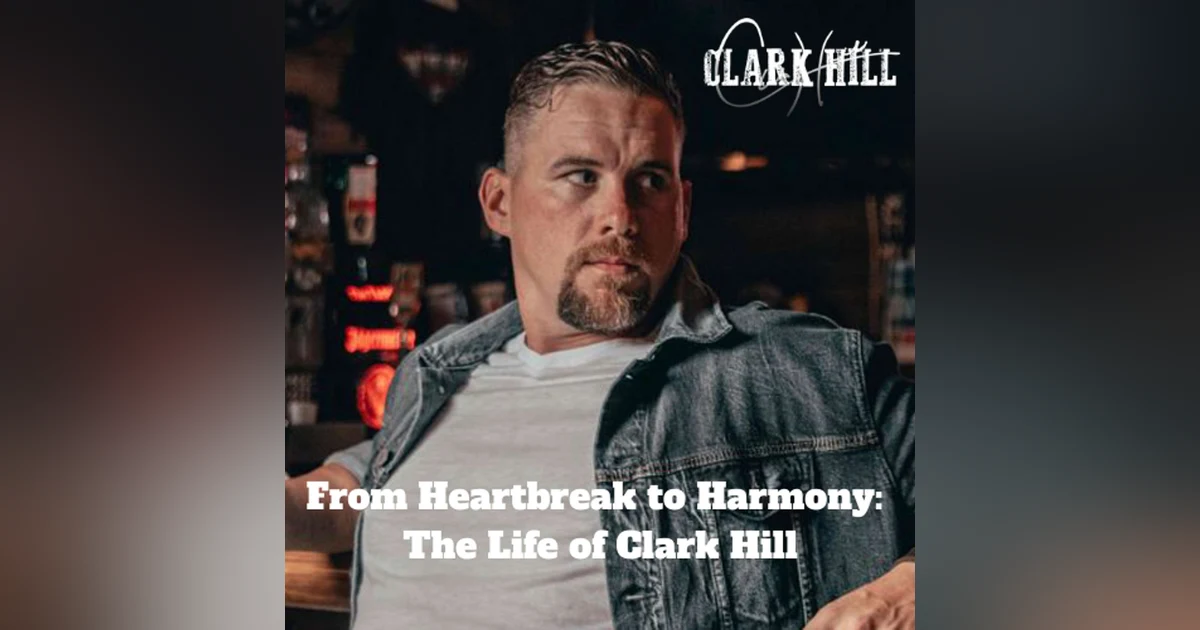
From Heartbreak to Harmony - The Life of Nashville Musician Clark Hill


 Apple Podcasts
 Spotify
 Castro
 RSS Feed
 Clark Hill is a talented singer-songwriter whose soulful voice and heartfelt lyrics have captured the attention of music lovers around the world. With a career spanning several decades, he has released numerous critically acclaimed albums blending elements of rock, folk, and blues into a sound all his own. Known for his raw emotion and authentic storytelling, Clark's music speaks to the human experience with honesty and depth.
From intimate acoustic performances to electrifying live shows, he continues to inspire fans with his passion and musical integrity. Today we dive into the life, music, and journey of the remarkable artist Clark Hill.
Your comments are appreciated!
Thanks for listening for more information or to listen to other podcasts or watch YouTube videos click on this link >
https://thetroutshow.com/

From Heartbreak to Harmony: The Life of Clark Hill
[Intro]
Clark Hill is a talented singer-songwriter whose soulful voice and heartfelt lyrics have captured the attention of music lovers around the world. With a career spanning several decades, he has released numerous critically acclaimed albums blending elements of rock, folk, and blues into a sound all his own. Known for his raw emotion and authentic storytelling, Clark's music speaks to the human experience with honesty and depth.
From intimate acoustic performances to electrifying live shows, he continues to inspire fans with his passion and musical integrity. Today we dive into the life, music, and journey of the remarkable artist Clark Hill.
[The Trout]
You could probably write songs for the rest of your life just about your history, but the one thing that really got me was about you was the fact that you used to play in football. You've talked already about it. You said your ankle got hurt playing football.
What did you play? What position did you play?
[Clark Hill]
I was a tight end linebacker. Okay.
[The Trout]
In high school, right? Yep. And is it true that I read that you had an undefeated year?
[Clark Hill]
No, my son had an undefeated year. My senior year, we went on a 10-game win streak. They took us to the state semifinals and then we lost.
[The Trout]
And your school couldn't have been that big. What was it?
[Clark Hill]
No, that would have been 2A while I was there. We were 500 students, 600 students. Same thing my son just did in the same town, too, just a few years ago.
My dad did it. My dad was a collegiate football player. We got a lot of, like I told you before you started recording, my son plays college ball.
And I was trending towards college ball, but had a child. I had my senior football season. We walked my basically infant daughter or toddler, whatever you want to call her.
She was a few months old, across the football field every Friday night. So it's a very unique scenario.
[The Trout]
Yeah. Well, when was the time, though? So you've gone through a lot in your life.
And I usually start asking people when they start picking up the guitar and start doing it. But you did it later in life, a little bit later. When was the time?
Do you remember when you said, after all the crap I've been through, I kind of like this and I think I want to do it all the time? Yeah. I mean, you kind of, I know people get into this stuff gradually, but what made you say?
[Clark Hill]
I think it was a culmination of things, honestly, because, you know, I've been around music my whole life and played music in church. And I mean, I loved it. I did Elvis Presley impersonations when I was younger, like I always loved music, but I never thought it was like a future.
I never it was just it was just there. It was just part of life. And then in my late 20s, 2012 to be exact.
So in 2012, I was going through a separation with my wife. I was married for 15 years. I got married right after high school.
And it was just it was a rough time in our marriage. And, you know, it's kind of like you alluded to, it's one of those songs or sorry, one of those stories people wouldn't really believe was, I mean, on my birthday, I found out that she's leaving and I had a wisdom tooth removed and it broke my jaw. I'm like, I'm gonna have all this stuff going on.
And my brother-in-law was like, hey, he played in a cover band. He had just married my sister. And he's like, why don't you come play music with me tonight?
And I'm like, you know, what are we what or why would I do that? I don't play music. And he's like, well, you do tonight.
And we went out to a place and I played music with him all night and faked my way through it and kind of caught the bug the first night. But I think the first night was just like, man, that felt good to do something different. At that point in my life, I hadn't really I was never a guy that went into the bars at all.
I had a huge issue with alcoholism that was kind of over my head. And I've been through a bunch of stuff already as a young adult. So it's just my life wasn't really in a position that I could even go do those kind of things.
I was really focused on trying to be a parent and trying to become a good husband. And so anyway, so I started playing with him on the weekends. And my mom and dad would watch my two kids and I would go play with him at these bars around Jacksonville and Gainesville and St. Augustine, Florida. And he encouraged me in these late night drives. You know, you finish a bar gig at 2 a.m. You drive back and had an hour and a half drive and you had an hour to break down. I mean, it'd be it'd be the wee hours of the morning.
And he and I were bonding and and he would just talk and talk and we would tell stories. And he was like, man, you should start writing. And I was like, why would I write?
You know, and he's like, you need to try it. And so I started writing music a couple of months after playing in those cover shows and we started playing those. So like I said, I was playing just kind of sitting in with a band that was nice enough to let me sit in.
[The Trout]
Right.
[Clark Hill]
And we started playing during their breaks. Me and my brother-in-law would play and I would play my songs and they were super serious and they were sad and they were love sad.
[The Trout]
You're going through that in your life. Yeah, absolutely. Yeah.
[Clark Hill]
Yeah. But we noticed people we noticed people paying attention. And that's the part that I think that really, really stands out even to this day.
And to the point that I'm in my career is like there's a lot that I haven't figured out. But the one thing I figured out is for whatever reason, Rick, people listen. And I don't know, like I'm a very spiritual person.
So to me, that's where my mind goes is like that's what the gift is. That the gift really isn't music. The gift is for whatever reason, you want to know more.
Yeah. People want to know more of the story. And like I said, there's so much more of my life story that hasn't been told yet that I look forward to the next decade or two decades of telling and sharing and ideally championing people to.
I mean, I've lived a really good life, but I've also lived a really hard life. And but I couldn't have had the good life if it weren't for the things I've been through. Right.
That kind of mentality. So when I started doing that and I started sharing my story through song. But realized people were listening.
I'm like, man, this is what I'm supposed to be doing. Why am I doing anything else? And that's basically how I caught the bug.
And I was in my late 20s and I did the same thing. I never moved. I had kids at home, but I was like, I'm going to Nashville.
I went showed up to Nashville and started knocking on doors. And I mean, I literally showed up in Nashville during the CMA Fest. I didn't even know what CMA Fest was.
I wasn't a country guy. I had no clue. I literally had no clue.
I show up during CMA Fest. I'm like on Music Row knocking on doors going, I'm going to find a record deal. I had homemade business cards.
My dad and my brother in law were walking up and down the street with me, laughing at me. And I was getting kicked out of Warner Music.
[The Trout]
And yeah.
[Clark Hill]
And, you know, it's like it's funny. Some of these people now are my friends. And it's really it's a really cool full circle thing of like what brought me to music was a little bit of the challenge of, you know, accomplishing, you know, something into a one percentile.
But then the opportunity to share a story is like that's probably what the core of it was for me.
[The Trout]
And I see people like you doing your what's it called? One beer. I think that's what it's called.
[Clark Hill]
Yeah. Yeah.
[The Trout]
I can tell you're having fun. And even though I don't know if all those people in that rest, that bar were all friends of yours, it doesn't matter. Everybody there was having a good time.
And how many times I've told young artists. And I see it doesn't matter who I see perform or interview when you walk on that stage and you look like you're having fun. The audience is going to have fun with you.
Yeah. So you you had the last album you brought out. Was that last year?
Was it earlier this year? Released something this year. I'm trying to remember what I.
[Clark Hill]
Yeah. So we've got we've done I just released my third song of the year. No second song of the year.
Sorry. Second song of the year. I released three songs last year and then there was a four year gap between music.
So my last album was right before twenty twenty or twenty eighteen or twenty nineteen and then covid and divorce and death of dad like all that took over. And then now I'm at like we've got about six more songs that are already recorded and finished that we're churning out. And we just did a blues release.
Friday will be two weeks ago. Right.
[The Trout]
Yeah. Friday was a goal.
[Clark Hill]
It's called Pray for Rain.
[The Trout]
OK. Make sure I get it. It's I'm a blues singer.
Yeah.
[Clark Hill]
Yeah, it was that was a man like what's been so cool about the newest experiences? You know, I don't know how much you're into the country line lane right now, but there's a lady named Kelly Sutton. That's one of the voices of the Opry and she does Opry TV.
And I interviewed with her last week and befriended her. I have a kind of a history of doing really well and kind of making friends. I love people, man.
So it's like I love making new friends. Like to me, these aren't just interviews. I love I love it.
I love your story just as much as I love telling mine, you know.
[The Trout]
Yeah.
[Clark Hill]
And Kelly and I were talking and she was like she goes, what what inspired this song? And she's like, I know that sounds like such a cliche question. She's like, but I'm asking and we were off air.
We were just standing in like backstage of the Opry. And she's like, you know what? What brought this about?
Because this just feels different. And I said, you know, that's ultimately what brought it about was that it feels different. I was like, that's what it was.
It's like I grew up a Southern rocker at heart. You know, to me, the Southern rock genre is the genre because the core of Southern rock is storytelling. So that's the country element of it.
And then, you know, blues is all about storytelling as well. But blues loves to tell it with how it feels, which is really important to me. Rock and roll, especially that era of rock and roll and Southern rock hit was was like the hell raisers.
Right. But every one of them, every single one of them were deep spiritual human beings. Most of them were somewhat intellectual.
So they had a thought process. Everybody sees them as, oh, they were out running drugs and partying. That wasn't the case all the time.
I mean, these guys were very deep thinkers and not just musically, just in life in general. And then you had gospel roots, which was really important to me and my spirituality. And so to me, I'm very proud to be a part of CMA, very proud to be a part of ACMs. I love the country lane, but like my lane is Southern rock. My lane is the 70s Southern rock, not just the sound, but like how we did music in that era was such a great era of music. And Pray for Rain was like my version of like, OK, if I was if I was the biggest artist in the world and I could do whatever I wanted, what would I do? And I was like, OK, well, here's a song that I would do it.
And we recorded the first part of it at Muscle Shoals.
[The Trout]
And which studio did you go to?
[Clark Hill]
I used a place called East Avalon. And I've heard of it. Super cool story about that, by the way, when we went, I went toward fame and Muscle Shoals sounds.
And then, oh, my gosh, Something Another Moon, the one that the Bob Seger, the one the Bob Seger.
[The Trout]
Oh, yeah, yeah, yeah.
[Clark Hill]
And that's on the river. And I'm like, I loved all those places. But I show up, I get into East Avalon and it just felt like what I wanted, which was like it was it's a house.
I mean, it's a studio, but it says they have like two apartments in it and a kitchen. And I've been I'm like, this is what I want.
[The Trout]
It's not in Muscle Shoals, is it?
[Clark Hill]
No, it's in Sheffield.
[The Trout]
Yeah, I've been there.
[Clark Hill]
Yeah, yeah. I went there with Mike.
[The Trout]
Yeah, it's quite the place. Is that the way I just sit down in the basement? They have the big river.
Yep, I've been there.
[Clark Hill]
Yes. Yep. It's actually it's the reverb sound that people are buying on Logic that the Muscle Shoals sound is actually that sound.
[The Trout]
Yeah, yeah.
[Clark Hill]
Yeah, it's like a dang block room is all it is. And they put a microphone and a speaker in there. And so it's like, but it just felt right.
So I recorded that there. And then when I go to record my vocals, I record my vocals in Nashville. I wasn't actually in Nashville.
I was like east of Nashville, like 40 miles. But with my guy that does my vocals and. I remember telling him, I'm like, I mean, I want to do this song and I'm recording the vocals.
And he gets on the talk back and he's like, Clark, he's like, I can hear you thinking what is going on in your head, like what's what's happening? I'm like, I don't know, man. He's like, well, what do you want to do?
And I was like, what I want to do on the song I can't do. And he said he brings me back in the control room and he's like, listen. He's like, I know you're a perfectionist.
I know you want people like you and all these different things. He said, but this is the one place that if we don't like it, we just hit delete and we do it again. He's like, try what you're feeling.
He's like, stop holding back. And so we went, I went back in and I cut that song the next take. And I was like, it's raw and it's honest and it's vulnerable.
And that's what I preach all the time is that like I want to be a vulnerable artist. I want to be a vulnerable public speaker. I want to be a vulnerable writer.
I want to be a vulnerable influencer, all these different things. And that's probably the first time that and my next song that's coming out. That's about my dad or the first two times that I've actually been vulnerable, like where it's just like, let me just tell the story.
Like lyrically, Pray For Rain is not super in depth, but let me tell you what, like it tells a story and it tells a deep, deep, deep, deep story. And it feels good. And it's got a blues sound to it.
And we let it breathe and let it kind of sit. And it just has all these cool things that, in my opinion, music's not doing right now. All genres like we we're in an age of technology, which I love technology, too.
Like, I mean, I'm all for it. But it's like we're in an age of technology where all the glitz and the glam can override the artistry. And Pray For Rain, man, like we just sat there and let it breathe and we just let it do its own thing.
And when we're done, we're like, OK, now that's the kind of music I can be proud of. And, you know, it's it's streaming pretty good. But it's like, you know, if if 50 million people don't listen to it, I'll be OK.
I'm happy with it. And that's that's what matters.
[The Trout]
That's what matters. You're happy with it.
[Clark Hill]
Yeah. And that's that's a new new era for me as an artist is being happy with what I'm putting out.
[The Trout]
And, you know, I think that's all moving along. I was going to say, I think the hardest thing being an artist, though, is trying to do two things at once.
[Clark Hill]
Yeah.
[The Trout]
Trying to accommodate your fan base or get new fans and still like what you do. Yeah. So it's like I've had people on here that are different artists.
And I say I think it's really good that you're different, but it's a good good and bad thing because you got to go out and find your own fans. You know, you're not trying to duplicate somebody else because you're you're writing a song and you're thinking, OK, this sounds like whatever. And then you have to get to a point where you go, OK, I just going to do.
And that's what it sounds like. You said on Brand for Rain, I'm doing what I like. And I took up philosophy back when I record my first album, 94, and we did it on tape.
It was everything that was in digital. We mixed mixed it to digital. And you just have to go to yourself and say, this is what I do.
If you like it, I made this decision. If you like it, you like it. If you don't, you don't.
I can't I can't change who I am to be a comment that you because I'll be changing all the time to accommodate you. And it's never going to happen. And what you said earlier is absolutely true.
I love digital recording because I can do everything I can now where I have to go used to have to go pay somebody to do it. And I've had to, you know, my own engineering and all that stuff. But it's going to become and it's how would I say it?
It's just not real anymore. Yeah, you know, and I was listening to the Stones got a brand new album out. It's just crazy.
Those guys on there. I think they'll die on stage. And I'm probably and I was listening to their first tune and it sounds like something out of the 60s.
They got that raw sound again that they learned. And I'm thinking they could do anything they wanted to and with anybody they want to. And what they did was they go back to their kind of roots or where they started 60 plus years ago.
And I think that's the hard thing about it. And when you do something like you just said with that song and you're happy with it, it really doesn't matter what people think. You just hope that they like it.
You know, and muscle shows was one of those things that was eye opening for me because the fact that then I realized that even though I've been playing for a long time, musicians are not competing with each other. We just do our own thing. And you may sing better than I do.
I might be able to do a blues lick better than you. And so everybody does their own thing. So you've got this.
So what do you do now? You've got the songs. And then you go out and support it and try to get out to try to get people.
Yeah, obviously.
[Clark Hill]
Yeah, so the last year for yeah, the last year for us has been really heavily media specific, which is I mean, it's a blessing and it's I mean, it's not my favorite thing. I love the people side of media, but like I prefer to play shows. I like to get one on one and connect with someone.
You know, so we're we're in the middle of development with WME now, which is a really good spot for me as an artist, because that's pretty much as high up as you can go. And my guys, one of the partners, like I'm in a really good spot. But it's like we have a lot of work to do in order to justify them putting me in the places they can put me in.
So we've been very heavy media oriented in the sense of just getting people to know who Clark Hill is or wanting to know more about who Clark Hill is and and then developing, kind of developing the sound a little bit, too, which I know is weird because I'm not a new artist anymore, but it's like really trying to hone in on what do I want to be, not what do I think people want me to be? Which the irony with me is that I have a lot of different sounds and not just because I have different influences, we all have different influences. But, you know, I can accomplish a lot of different things.
None of it great by any means. But I have a lot of different things that are infiltrating my music all the time. And for me, historically speaking, in a live environment, which is where I'm my best at, I give a taste of all of those.
I always have. You know, I did a thing out in Oregon at the end of the year last year for Oregon Jamboree, and I had a 60 minute set on the big stage. And I remember being like, OK, where am I going to go with this show?
And as we got closer, I'm telling my band what I want to accomplish. And they're like, well, it feels all over the place. And I'm like, it is.
But I have a reason. And my reason was to kind of try to show the audience the similarities where you have this East Coast Southern boy that's going to come to the Pacific Northwest. I'm going to bring you this taste of Southern rock and some of the things that you think you love about music, and then I'm going to show you where they all kind of intersect together, which is that music and the irony in this.
And I want to stop myself is that I am probably the farthest thing from a bleeding heart. I'm a true old school, like rough around the edges Southern boy. But I have this deep affinity for just believing that we all have similarities no matter what, no matter what our political differences, religious differences, colors.
It doesn't matter to me. I think there's always a way to get along with everybody. There's a line of respect that is drawn.
I'm definitely a very alpha male personality type, but not like twenty twenty six alpha male. I'm like an old alpha male. And so my thing is, is I'm like, I'm standing on a stage.
Yeah, a lot of people don't. But I know what I mean. So I'm standing on the stage.
I'm like, I have this opportunity. And again, like I keep talking about, I'm very spiritual. I believe that God has me here for a reason.
And I better listen to him more than I listen to anybody else.
[The Trout]
Yeah.
[Clark Hill]
And it doesn't mean that I get up there and preach the gospel. It doesn't mean that I get up there and share a story that people judge me for. It just means that I better be willing to be vulnerable because God will move if you let him.
That's my mentality. So when you pull people into a room and you pull them into an environment, how can I get all of these people from different areas, from different likes, from different dislikes, and how can I get them on the same page? And to me, music is part of that, right?
So music is such a great gift. Well, why for me and I fight my team on this sometimes. Like, why should I fight and stay with one sound so that you can identify me when that's not how you identify me anyway?
Like what I listen to in music today is not what I'm going to listen to tomorrow. And to me, that makes me human because I think every human does that. Every human may love, you know, like my biggest artist to influence me, Elvis Presley is number one.
Number two is Prince. Number three is Lynyrd Skynyrd. You know what I mean?
Then you have like a Boyz II Men influence and a Gaither vocal band influence, right? You have all of these different things that have different elements. But my point behind it is that is that today I may want to listen to 90s country and tomorrow I may want to listen to ACDC.
And I think that is more normal than people realize. Right. I think that is the normal progression for music lovers.
So why fight to only have this one sound? At the end of the day, when I open my mouth, you're going to know it's me regardless, right? You're going to hear my voice.
[The Trout]
Yeah, but the point being is every time you write a song, it still has you in it.
[Clark Hill]
Yes, exactly.
[The Trout]
And it's like. It doesn't matter because it because it's always going to be if they understand you. Then they're going to hear they're going to hear you, they're going to hear your song, doing whatever you want to do.
[Clark Hill]
You know, Rick, one of my other things, too, is that you keep hearing me use the word vulnerability that has probably been the word of the year when it comes to media, right, is that I talk about vulnerability, then you better be willing to live the vulnerability. And one of my things is that I don't know everything about who I am as a man yet neither. And that's a really scary but also very fun experience.
Right. So the more I'm willing to experience that in music, the more that I will find the people that want to hear or maybe more importantly, need to hear my music, right, is that music is a very special thing. And I may not know exactly what I'm accomplishing, but if I'm willing to share it, right, if I'm willing to experience that emotion publicly, then then maybe we do something special with it.
And, you know, one beer is a really cool example, because I'm actually even though I'm a southern rocker at heart, I'm a really heartfelt songwriter, like most of my songs are going to be leaning more towards power ballads, normally some kind of love story or heartbreak story or spiritual journey. And one beer was like a fun side for me, where it's like, hey, I'm fun as well.
[The Trout]
That's a blues riff. I mean, that's a blues song.
[Clark Hill]
Well, I can tell you this, if you if I would hope that one day you'll make one, you come see my live show, what you'll find out with me is that probably the most important thing for me when it comes to music is actually not the lyrics. It's I'm a very big feel oriented guy. So my band gets very preached at all the time about understanding the dynamics of a show, especially a live show.
And my evolution in the studio has finally started to take that on, which is that I want people to feel it before they even know what I'm saying. I want them to feel the emotion of the song. I want it to touch them.
I want the chill bumps to come up on their arms before they even know what's going on. And to me, that gives me the greatest opportunity to do something. You know, I had a big interview yesterday and I told the lady, first time I ever said it in an interview, I couldn't believe it.
But I guess I'm going to start sharing. And I was like, my greatest personal fear in life is my funeral being empty. And a lot a lot of people just like, man, what does that even mean?
But it is. It's a huge driving fear of mine.
[The Trout]
Right. Yeah.
[Clark Hill]
Yeah. So so when it comes to music and dynamics, to me, that's one of the things that I can do to directly influence that is that if I make you feel something, I don't even have to make you smile. If I make you feel something, you're probably going to want to come back.
Right. Because that's what music does.
[The Trout]
Yeah.
[Clark Hill]
Especially the era of music that I'm in love with, that older era of music, you know, that 70s, 60s and 70s music. I mean, it definitely goes before then, too. But I'm such a huge 70s guy, which isn't even that old of an era of music.
I mean, there's a lot of crazy good things happening in the 40s and 50s. And but the 70s was such a movement of just rock stars, man, that were talking about real life stuff and touching on real subjects and how hard life was for them back home and and loving and just real, real, it wasn't just there because it sounded cool. And, you know, I think back, I don't know how much of a Lynyrd Skynyrd fan you are, but like it's not my favorite Lynyrd Skynyrd song, but there is a song by Lynyrd Skynyrd called I Need You.
And I mean, it's a love story, right? It's a heartbreak and a love story. But you want to talk about a song that just sounds like a rock song, but it's a love song, right?
And that was like huge for me and it's huge for me now. When I think about music, I'm like, we have so many ways that we can tell a story. And like you alluded to at the very beginning, I have such a story to tell.
Like, we can't we can't even tell my story. And we could spend a whole day on here and we can't tell half of my story.
[The Trout]
Oh, yeah.
[Clark Hill]
And I think that's what's so fun about it. It's years and years and years to really share this with the world.
[The Trout]
Well, and you have a couple other things going on. I think one of them, other than you're doing what you want to do, but also. Your story.
Will change other people's lives, too. That's not why you're doing it, but that's not your main drive. But I mean, when you get up there and you start to people look at your story and the more you do it, more people are going to read about you, they're going to go, well, wait a minute.
I was a teen dad, too, and look how he's overcome what he had to overcome. But the song that you're just talking about, praying, praying for rain, it's out now you've released it.
[Clark Hill]
Yeah. Yep. It came out almost like I said, almost two weeks ago.
Pray for rain.
[The Trout]
Now, have you got a video going with that one? Are you going to shoot a video or have you?
[Clark Hill]
We just did some like content, short content and video stuff on it. And then we're going to get ready for the next one. That's a song about my dad that we're going to be around Father's Day.
[The Trout]
That's coming up.
[Clark Hill]
Yeah. Yeah. That one's going to be a hard one, but we're going to do it.
[The Trout]
Yeah. Well, it's cathartic for you.
[Clark Hill]
Yeah, I think it'll be good. I mean, it's a it's a cool song. And, you know, I just I just wonder a little bit if the timing is right.
But I think it is. I mean, I'm going to trust my team. And we've built a pretty good team and we're building a building, a good team.
And I'm going to trust it and we're going to put it out. We're going to be vulnerable, like I keep saying. And we're going to see what the world thinks.
And, you know, if it changes a life and then I did my job, it's that simple.
[The Trout]
So you have to come to Dallas so I can watch you.
[Clark Hill]
Absolutely. Yeah. I actually got a new buddy I just made in Dallas this weekend.
I was went to get the opportunity to go spend some time with Blake Shelton backstage at Coliseum at Caesars Palace, which was really cool. And it was I just finished my pilot's license. So that's always a cool talking point.
And I met Blake's pilot. No, but he had his pilots were there, OK, because they're going back and forth. So I met his helicopter.
He has a helicopter pilot and a jet pilot. And I was talking to his helo pilot and his helo pilot's like, man, you need to come out to Dallas. And he's a 23 year Marine Corps veteran that was a flight instructor, Marine Corps.
And he's a flight instructor, civilian flight instructor for helos. And he was like, man, he's like, I love music. I love this blah, blah, blah.
It would be my honor to give you your helo endorsement. Why don't you come out of Dallas? And he was literally right before I got on with you.
He was texting me. He's like, I was dead serious, man. Are you coming to Dallas?
I'm like, I will come.
[The Trout]
Yeah, I know where they train. I know where they train.
[Clark Hill]
Yeah, I have to go do that. I like that's the one thing that's really fun about this industry. You meet a lot of cool people.
[The Trout]
You come to Dallas. There's just a few places to play in Dallas, Fort Worth.
[Clark Hill]
Yeah, there's one or two. There's a couple that are on my I did a I did a thing with Craig Morgan at Billy Bob's or whatever. It's Billy Bob, Billy Bob, Billy Bob's.
[The Trout]
Yeah, Billy Bob's. Yeah.
[Clark Hill]
Yeah, I was definitely a place I would like to come visit again. But I'll tell you, I'll play anywhere as long as you don't ask me to play four hours on a bunch of cover songs. I'll play anywhere.
I'll play in a backyard. I don't care.
[The Trout]
Well, that's all you need to know, brother, is you love what you do. And I hope that you continue to grow bigger and bigger. Yes, sir.
And thank you.
Thank you for listening www.TheTroutShow.com